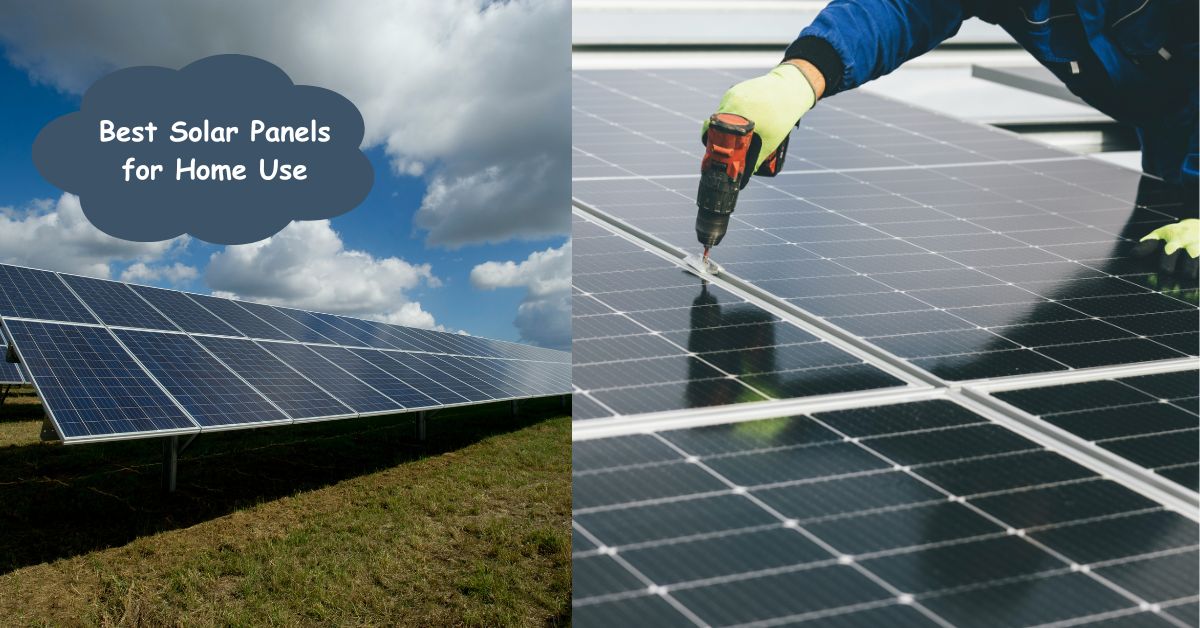
Switching to solar power is one of the smartest home investments available today. Not only do solar panels reduce or even eliminate monthly electricity bills, they increase property value, lower your carbon footprint, and provide long-term energy security. But the real question for homeowners isn’t whether to go solar — it’s which solar panels to choose. With dozens of brands, multiple cell technologies, varying warranties, and different real-world efficiencies, picking the best solar panels for home use requires understanding performance, reliability, cost, and your household’s energy profile. This guide walks you through the top panel types, leading manufacturers, installation considerations, and practical tips to get the most from your residential solar system.
What “best” really means: performance, durability, and value
When evaluating solar panels, “best” should be defined by a combination of factors: energy output per square foot (efficiency), long-term reliability (degradation rate and materials), warranty coverage (product and performance guarantees), bankability of the brand (company stability and track record), and the effective cost per watt over the panel’s useful life. High-efficiency panels deliver more electricity from the same roof area — helpful for small roofs or homes with shade. Durable panels with low degradation rates keep production higher over 25+ years. Strong warranties (25-year performance and 10–25-year product warranties) protect your investment. Finally, consider real-world value: a lower upfront price might look good, but if the panel performs poorly after a few years or the manufacturer disappears, your long-term cost-per-kilowatt-hour will be higher. So the “best” panel blends high efficiency, low degradation, strong warranty, and proven reliability at a price that fits your budget.
The main solar panel technologies: monocrystalline, polycrystalline, and thin-film
There are three main solar cell technologies used for residential panels. Monocrystalline panels are made from single-crystal silicon and generally offer the highest efficiencies (often 19–23% or more) and the best space-to-power ratio, making them ideal for roof-limited installations. They typically have better low-light performance and slightly lower degradation rates than alternatives. Polycrystalline panels are made from multiple silicon crystals melted together; they cost less but are usually a bit less efficient (roughly 15–18%) and slightly larger for the same wattage. For homeowners with plenty of roof area, polycrystalline can be a cost-effective choice. Thin-film technologies (like cadmium telluride or CIGS) are flexible and lightweight and work well in niche installations, but they tend to have lower efficiencies and larger area requirements, so they are less common for typical home rooftops. Nowadays, most residential systems use monocrystalline panels because they maximize output in the available roof area and provide consistent long-term performance.
Top-rated panels for homes: what market leaders offer
Several manufacturers consistently stand out for combining efficiency, warranty, and reliability. Tier-one manufacturers typically include companies like SunPower (now Maxeon in some markets), LG (historically LG Solar, though business changes affect availability regionally), REC, Q CELLS, Panasonic (now under different corporate structures in some regions), Canadian Solar, and JinkoSolar. SunPower/Maxeon panels historically lead on efficiency with premium panels that can exceed 22%–24% efficiency and show very low degradation rates. These panels tend to be higher priced but deliver the best performance per square foot and excellent warranties — often a 25-year combined product and performance warranty. REC and Q CELLS strike a good balance between performance and cost, offering panels in the 19–21% efficiency range with strong 25-year performance warranties and solid build quality. Canadian Solar and JinkoSolar offer competitive pricing, broader availability, and good performance, making them popular choices in budget-conscious installations. Always check the most recent test data and local availability, but generally, these brands represent the safer long-term bets for residential systems.
Efficiency vs. cost: how to evaluate tradeoffs
Efficiency matters if roof space is limited or if you want to maximize energy generation from a small array. If you have a large, unobstructed roof area, you might choose slightly less efficient panels to save on upfront cost while still meeting your energy needs. The practical way to evaluate options is to calculate levelized cost of electricity (LCOE) for the panel options — essentially the expected cost per kWh produced over the panel’s warranty period or expected life. Many installers provide system-level cost comparisons that include panel price, inverter cost, labor, and expected annual generation. Don’t choose solely on $/W; instead, look at $/kWh over 25 years using realistic production estimates for your location. A higher-efficiency, premium panel may cost more upfront but produce more energy and degrade less, lowering $/kWh and providing better returns in the long run.
Real-world durability: degradation rates and warranties
All solar panels degrade over time — they produce slightly less electricity each year. Industry averages used to be about 0.5–1% degradation per year; premium panels often decline by ~0.25–0.5% annually, meaning they retain more of their initial capacity after 25 years. Warranties are another critical measure: look for a 25-year performance warranty that guarantees a certain percent of original output (commonly 80–90% at year 25) and a product warranty that covers manufacturing defects (typically 10–25 years). Also consider physical durability: panels designed for heavy snow, high winds, or salt-spray corrosion (for coastal homes) are more robust in real-world conditions. Installers also matter — poor installation can void warranties or lead to hot spots and premature failures. Make sure the panel warranty is transferable if you sell the house; transferable warranties add resale value.
Matching panels with inverters and battery storage
Your solar panels are one part of the system. The inverter — string inverter, microinverter, or power optimizers — converts DC to usable AC and plays a big role in system performance, especially in shaded or complex roof layouts. Microinverters (one per panel) or power optimizers (paired with a central inverter) improve performance in shaded conditions and allow panel-level monitoring; they’re often recommended for roofs with obstructions or multiple orientations. String inverters are simpler and often less costly for uniform, unshaded arrays. If you plan to add battery backup, choose panels and inverters that integrate cleanly with battery systems (such as Tesla Powerwall-compatible systems or other battery brands). Prioritize reputable inverter brands like SolarEdge, Enphase, SMA, or Fronius depending on your layout — they have proven reliability and good monitoring platforms.
Installation best practices: tilt, orientation, shading, and roof condition
Even the best panels underperform if not installed correctly. Orientation and tilt significantly impact annual energy yield: in the Northern Hemisphere, south-facing roofs typically capture the most sun, with east and west orientations producing slightly less but often still economically viable. Tilt angle should approximate your latitude for year-round optimization, though many roofs are fixed and installers adapt designs accordingly. Shading from trees, chimneys, or other buildings can reduce output; use shade-tolerant systems (microinverters or optimizers) if shading is unavoidable. Before installation, inspect roof condition — if a roof needs replacement within a few years, replace it first to avoid costly panel removal and reinstallation. Local climate also matters: choose panels rated for high wind loads, heavy snow, or salt corrosion if you live in an exposed area.
Cost considerations and how to compare quotes
Get multiple quotes from certified installers and ask for system-level metrics (expected annual kWh, system size in kW, production estimates for year 1 and year 25, all-in costs including permits and installation, and available incentives). Beware of quotes that only give $/W without production estimates — two panels with the same watt rating can generate different amounts of energy depending on efficiency and actual operating conditions. Ask about performance monitoring, roof-penetration methods, and ground-mount or carport options if roof space is limited. Factor in local incentives, net metering policies, and any time-of-use rates that affect the financial return. Financing options include cash purchase, solar loans, leases, or power purchase agreements (PPAs) in some regions; each has different implications for ownership, tax credits, and long-term savings.
Maintenance and long-term care
Solar panels require minimal maintenance: regular visual inspections, occasional cleaning (especially in dusty or pollen-heavy regions), and inverter checks. Many modern systems include remote monitoring that alerts you to underperformance or faults. Annual or bi-annual visual inspections can catch issues like debris, lifted clamps, or animal damage to wiring. Keep vegetation trimmed to avoid shading, and document baseline production so you can spot drops in output. If you ever notice significant underperformance, contact your installer — reputable installers often include a workmanship warranty and service plans. Proper care ensures panels continue delivering optimal value for decades.
Environmental and resale considerations
Installing solar panels reduces your home’s carbon footprint significantly and may qualify you for local environmental incentives. Solar-equipped homes also often sell faster and at higher prices; buyers appreciate lower monthly energy costs and the potential for reduced long-term utility bills. When selling, a well-documented solar system (with warranties, maintenance records, and transferability details) increases buyer confidence. If your panels are leased rather than owned, ensure the lease terms are transferable or discuss buyout options before listing the property.
How to choose the best panel for your home in three steps
- Assess your roof and energy goals: Calculate available roof area, roof orientation, shade patterns, and your annual electricity use. Decide whether your goal is to offset 100% of usage, cover specific loads, or add battery backup for resilience.
- Compare reputable panel options: Request quotes from installers using panels from trusted manufacturers. Compare expected kWh output (not just wattage), degradation assumptions, and warranty terms.
- Evaluate total system value: Look at $/kWh over 25 years, factoring in incentives, inverter choices, installation quality, and potential future maintenance. Choose panels and an installer who provide transparent performance estimates and strong warranty support.
Final thoughts: balancing performance, price, and peace of mind
Choosing the best solar panels for home use comes down to balancing efficiency, durability, warranty protection, brand reliability, and cost. For tight roofs or premium performance, high-efficiency monocrystalline panels from top-tier manufacturers make the most sense. For larger roofs and budget-conscious homeowners, reliable mid-tier brands that offer competitive warranties may be the best value. Whatever route you take, work with certified local installers who can assess your specific site conditions and provide realistic production estimates and transparent contracts. With the right equipment and proper installation, solar panels deliver clean energy, meaningful bill savings, and peace of mind for decades — making them one of the most compelling home investments available today.
Conclusion
Solar panels are no longer experimental technology — they’re a mature, reliable, and increasingly affordable way to power homes. To identify the best solar panels for home use, focus on long-term production, low degradation, strong and transferable warranties, and established manufacturer support. Pair high-quality panels with an appropriately sized inverter and consider battery storage if resiliency is a priority. Get multiple professional quotes, compare production estimates in kWh (not just panel wattage), and verify local incentives and net metering rules to ensure the strongest financial return. With careful planning, quality equipment, and professional installation, your residential solar system will reward you with reduced energy costs, increased home value, and a smaller environmental footprint for decades to come.